Category: National News

  • Rising Fire in the Gulf: War, Power, and the Human Cost of U.S.–Iran Escalation

    Rising Fire in the Gulf: War, Power, and the Human Cost of U.S.–Iran Escalation


    U.S. Navy photograph by Lt. Lauren Chatmas.

    As tensions between the United States and the Islamic Republic of Iran intensify, communities across the globe are watching closely not only for military developments, but for the human consequences that often fall hardest on everyday people. What began in late February as coordinated U.S. and Israeli strikes on Iranian military infrastructure has escalated into one of the most volatile confrontations in the Middle East in years. U.S. officials described the opening assault as a necessary move to weaken Iran’s offensive capabilities, targeting missile systems, command centers and senior leadership figures in and around Tehran. Iranian state media confirmed the deaths of high-ranking officials in the strikes, marking a dramatic shift in an already fragile relationship between the two nations.

    Iran responded swiftly and forcefully, launching waves of ballistic missiles and drones at U.S. military installations and allied targets throughout the Gulf region. American service members have been killed in the retaliation, with additional casualties reported among regional partners. Civilian deaths are also mounting, as urban areas in Iran and parts of Israel and neighboring states have absorbed the shock of sustained aerial bombardments. Independent monitoring groups estimate that hundreds of Iranians have died since the conflict began, raising urgent concerns about humanitarian fallout.

    Beyond the battlefield, the ripple effects are being felt in global energy markets and working-class households worldwide. Iran’s moves to restrict traffic through the Strait of Hormuz a strategic passageway through which a significant portion of the world’s oil supply flows have contributed to rising fuel prices. For many families already grappling with inflation, the economic strain adds another layer of uncertainty to an already unstable moment.

    Diplomatic efforts appear strained. The United States has ordered non-essential diplomatic staff and military families to leave parts of the Middle East as security risks increase. International leaders are calling for restraint, warning that the conflict could widen if additional regional actors are drawn in. Armed groups aligned with Iran have signaled support for Tehran, raising fears that what began as a bilateral confrontation could evolve into a broader regional war.

    At home, reactions in the United States are divided. Some lawmakers argue that the strikes were a defensive necessity tied to longstanding disputes over Iran’s nuclear ambitions and regional influence. Others question the long-term strategy and warn of repeating cycles of intervention that have historically destabilized the region and disproportionately harmed civilians. Public opinion remains cautious, with many Americans expressing concern about another extended military engagement overseas.

    Image credit: Brookings

    For Black communities in the U.S., where military service is a pathway for economic mobility for many families, the stakes are deeply personal. Each casualty reverberates far beyond official briefings, touching neighborhoods where uniforms are worn with pride but also with risk. Globally, people of color often bear the brunt of geopolitical power struggles, and this moment is no exception.

    As the conflict unfolds, one reality remains clear: wars are never contained neatly within borders. They shape migration, economies, political alliances and public trust for years to come. Whether this confrontation de-escalates through diplomacy or hardens into a prolonged regional conflict will depend on decisions made in the coming days and weeks. For now, the world watches aware that beyond strategy and rhetoric, it is not the powerful architects of war who stand on the front lines, but ordinary people. Often the same working-class communities and disproportionately Black service members whose lives are now suspended in the balance.

    BY: BEWITTY Staff

  • The Legacy of Martin Luther King Jr.: Courage Beyond Comfort

    The Legacy of Martin Luther King Jr.: Courage Beyond Comfort

    Civil Rights leader & Black American Icon Dr. Martin Luther King Jr.

    Each year on Martin Luther King Jr. Day, America repeats a familiar ritual. Quotes are shared, photos are reposted, and Dr. King is remembered as a gentle dreamer whose message was unity, peace, and hope. This version of Dr. King is comforting. It is also incomplete.

    If Martin Luther King Jr. were alive today, he would not be widely celebrated. He would be criticized, mischaracterized, and accused of being divisive. The language would be different, but the response would be the same. Where he was once called an agitator or a troublemaker, today he would be labeled “woke,” “radical,” or “anti-American.” His presence would not be welcomed; it would be policed.

    This is not speculation—it is history. During his lifetime, Dr. King was deeply unpopular with the majority of Americans. He was surveilled by the federal government, jailed repeatedly, and pressured to abandon his work. He was told to slow down, to wait, and to be more considerate of those made uncomfortable by his demands. His strongest opposition often came not from extremists alone, but from moderates who preferred order over justice.

    If Dr. King were organizing today, he would be condemned for the same reasons. He would be criticized for disrupting traffic, for interfering with the economy, and for refusing to make his demands more palatable. His outspoken critique of capitalism, militarism, and economic inequality would be dismissed as unrealistic or dangerous. The very tactics that made his movement effective would be used as evidence against him.

    Black Americans did not simply inherit Dr. King’s dream, we inherited the weight of carrying it forward in a society that still resists its fulfillment. We inherited the expectation to remain calm while harmed, to be articulate in moments of grief, and to extend grace in situations where justice is absent. We were taught that if we spoke correctly, dressed appropriately, and protested peacefully enough, progress would follow.

    But respectability has never been a shield. Dr. King was educated, eloquent, and intentional. He wore suits. He spoke with moral clarity and spiritual conviction. Yet none of that protected him from being labeled a threat. None of it spared him from surveillance or violence. His life stands as evidence that respectability does not guarantee safety, and dignity does not ensure acceptance.

    Respectability politics suggest that Black humanity is conditional that our worth depends on how comfortable we make others feel. Dr. King’s experience reveals the flaw in that logic. You can be respectful and still be rejected. You can be peaceful and still be punished. You can be right and still be resisted.

    Dr. King was not killed because he was polite. He was killed because he was effective. His message challenged the economic and social foundations of the nation, and that challenge was never meant to be embraced without resistance.

    Today, Dr. King is celebrated largely because he no longer disrupts. His words are quoted, but his critique is ignored. His dream is honored, but his demands are softened. The systems he called unjust remain largely intact, while his legacy is used to silence those who continue the work.

    On Martin Luther King Jr. Day, it is not enough to remember what he hoped for. We must also confront what he warned us about. Dr. King did not ask America to like Black people. He asked America to change.

    If that truth remains uncomfortable, it may be because we are finally listening closely enough.

    Honoring Dr. Martin Luther King Jr. means engaging his truth, not just repeating his words. His legacy calls us to confront why the injustices he challenged still endure and why those who speak with similar urgency today are often dismissed.

    Dr. Martin Luther King Jr. gave this country a moral blueprint rooted in courage, love, and an unshakable demand for justice. His legacy lives not only in his words, but in the generations who continue to walk forward with the same conviction, carrying his vision with strength, dignity, and hope.

    BY: BEWITTY Staff
  • A Viral Video and a National Crisis: The Harsh Reality of Black Maternal Care

    A Viral Video and a National Crisis: The Harsh Reality of Black Maternal Care

    Image credit:womensfundingnetwork.org

    A recent video showing a Black woman in active labor being ignored by staff at a Texas hospital has intensified national scrutiny of how Black women are treated during childbirth in the United States. In the footage, captured in a Dallas-area facility, the woman is visibly in pain, repeatedly asking for help while a staff member continues standard intake questions with little sense of urgency or empathy.

    According to the family, she remained in the waiting area for more than 30 minutes before receiving care, despite showing clear signs of active labor. She reportedly gave birth just minutes after the recording ended. The professional organization Association of Women’s Health, Obstetric and Neonatal Nurses publicly condemned the situation, calling it disrespectful, discriminatory, and unsafe. Their statement underscored concerns that what occurred in the waiting room was not an isolated error, but part of a systemic pattern of racial bias that has long plagued maternal care in the United States.

    Medical research and advocates point to one persistent and harmful stereotype that may have influenced the staff’s response: the belief that Black people have a higher tolerance for pain. Despite its origin in racist pseudoscience dating back to slavery, this myth continues to shape medical decision-making. Studies have documented that Black patients are less likely to receive adequate pain medication, more likely to have their symptoms dismissed, and more frequently experience delayed treatment compared to White patients. For Black women in labor, these assumptions can convert already vulnerable circumstances into dangerous, sometimes fatal outcomes. When a laboring woman’s pain is minimized, the warning signs of obstetric emergencies can be overlooked, leading to complications such as hemorrhage or hypertension that require immediate intervention.


    Historical records indicate that Anarcha Westcott featured above underwent approximately 30 surgical operations performed by J. Marion Sims over several years all without anesthesia, despite its availability at the time. These repeated procedures highlight both the historical inhumane brutality of medical negligence regarding Black women.

    The broader context is grim. Black women in the United States are more than three times as likely to die from pregnancy-related causes as White women, and this disparity persists even when researchers account for socioeconomic status, education, and insurance coverage. This suggests that maternal health disparities are not solely the product of income gaps or inconsistent access, but reflect deeper structural inequities within the healthcare system. Many deaths are considered preventable, and experts say a significant number result from delayed responses, mismanagement, and failures to take concerns seriously in clinical settings. Black women also face increased risk of complications due in part to chronic stress associated with racism and inequality, which can affect pregnancy outcomes long before delivery begins.

    Image credit: Amerihealth.com

    Advocates argue that meaningful solutions require attention to both clinical practice and systemic reform. They emphasize the need for improved training to address implicit bias, better access to high-quality prenatal and postpartum care, and greater accountability when hospitals fail to provide equitable treatment. Some point to community-based approaches, including the use of doulas and midwives, as effective strategies for ensuring that Black mothers are heard, supported, and treated with respect. Others call for hospitals to track and report maternal outcomes by race, allowing the public to see where disparities persist and demanding transparency from institutions.

    The video that drew widespread outrage is only one visual representation of a crisis that has been unfolding largely out of public view. Behind statistics are women whose experiences during childbirth have left them traumatized, families grieving preventable deaths, and infants facing long-term health challenges linked to inadequate care. For many advocates, this incident is not simply a story about negligence, but a reminder of how racial bias can be embedded in routine processes, and how quickly routine can become deadly when urgency is not applied equally. As public attention continues to grow, so does pressure on healthcare systems and policymakers to confront the realities of Black maternal health in America. The expectation, advocates say, should be basic: that every woman, regardless of race, receives compassionate, timely, and competent care at a moment when her life and her child’s life depend on it.

    BY: BEWITTY Staff

  • Unseen Valor: Honoring the Black Heroes Who Shaped America’s Military Legacy

    Unseen Valor: Honoring the Black Heroes Who Shaped America’s Military Legacy

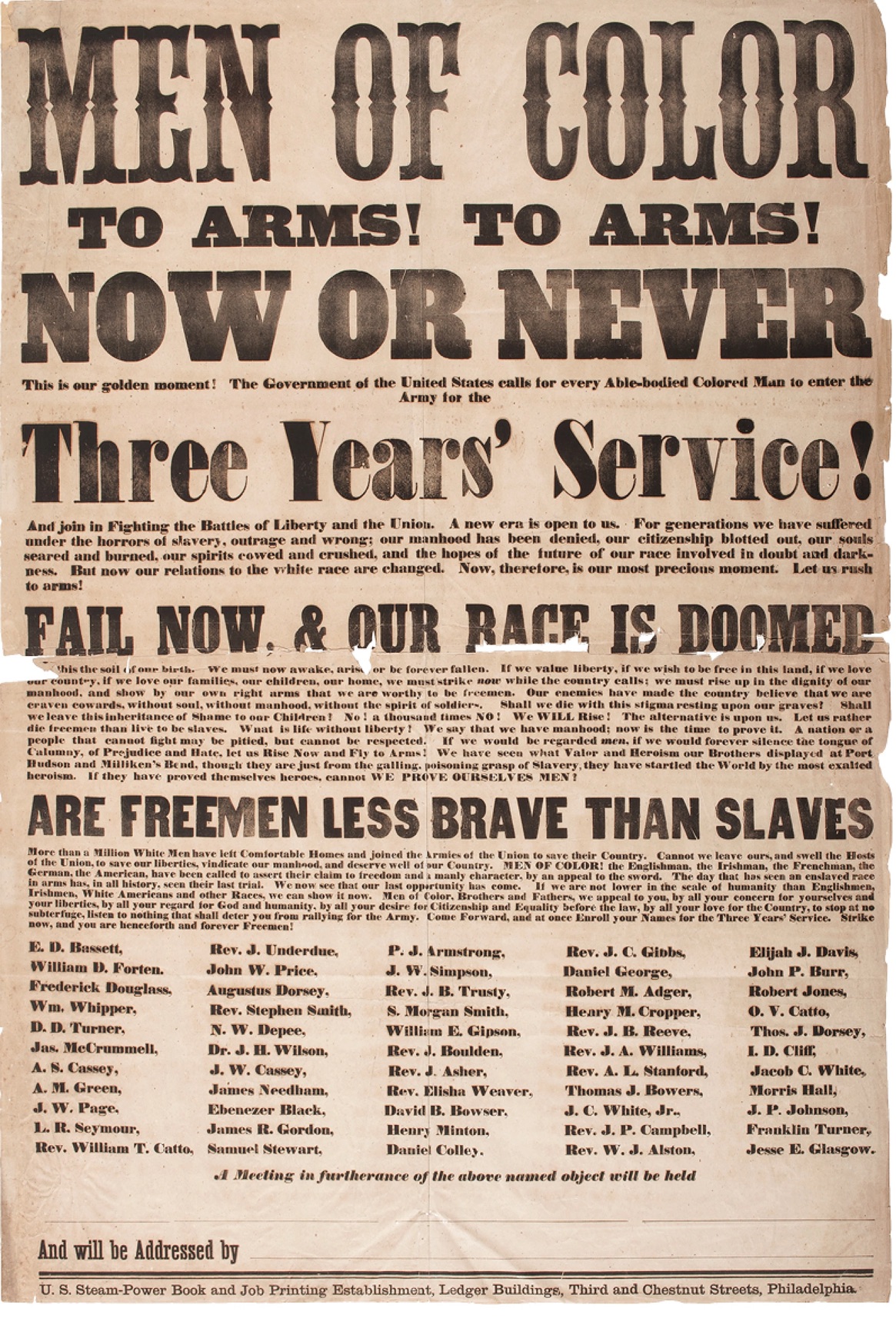
    Black Americans have served in U.S. military forces from the earliest days of the nation despite facing discrimination, segregation, and unequal treatment, yet still contributing significantly to the defence of the country.

    During the Civil War, more than 179,000 Black American men served in the Union Army, amassing more than 10% of its total force many of whom were formerly enslaved men from the Confederate states.  One notable figure: William H. Carney. As a Sergeant with the 54th Massachusetts Infantry Regiment, carried the Union flag during the assault on Fort Wagner, South Carolina, in 1863. Severely wounded, he nonetheless kept the flag aloft, and eventually received the Medal of Honor in 1900. 

    Black American soldiers typically served in segregated units well into the 20th century. Despite that, they contributed in all the major U.S. wars.  For instance, Henry Johnson (of the 369th Infantry Regiment, the “Harlem Hellfighters”) fought in WWI in Europe, engaging in hand-to-hand combat with German troops and earning the French Croix de Guerre. His story is emblematic of courage despite the racial challenges faced back home. 


    Company E, 4th U.S. Colored Infantry, Fort Lincoln brave soldiers whose service in the U.S. Colored Troops helped secure victory and redefine freedom. (Library of Congress)

    The U.S. Army itself recognizes a number of “firsts” for Black Americans: Benjamin O. Davis Sr. became the first Black American general officer in the U.S. Army in 1940.  Another example: Col. Charles Young, who in the late 19th / early 20th century became the first Black colonel in the regular U.S. Army and commanded Black American troops. 

    Image credit: US Army

    The service of Black Americans in the U.S. Army helped lay a foundation for integration and progress within the military. Segregation ended in large part following Harry S. Truman’s 1948 executive order desegregating the armed forces. Recognizing this history helps us understand that the day of Veterans Day is not just about generic service, but about the sacrifices made by people who America was fighting yet fought for it.


    The 369th Infantry Regiment rose above relentless discrimination and neglect to earn the legendary name “The Harlem Hellfighters,” becoming one of the most decorated and fearless units of World War I. (Photo courtesy of the U.S. Army)

    Veterans Day isn’t only about remembering those who “went to war” it’s about acknowledging all veterans and their willingness to serve the nation in times of need.

    For Black Americans, service in the U.S. Army and other branches has been interwoven with the broader struggle for civil rights, equality, and recognition. Their military contributions reinforce the principle that defense of the country and the ideals of freedom and justice are shared responsibilities even when those ideals haven’t always been fully extended. Recognizing the role of Black service members enriches our understanding of American military history and helps ensure that commemoration is inclusive.

    Veterans Day, observed each year on November 11, honors the courage and sacrifice of all U.S. military veterans. But it’s also a time to recognize the extraordinary contributions of Black Americans, whose service has been both pivotal and often overlooked throughout history.

    From the earliest battles for freedom to modern warfare, Black soldiers have fought with resilience, integrity, and patriotism irregardless of facing discrimination and segregation.

    Alexander Kelly and André Cailloux proved their valor on the front lines, earning medals and changing perceptions of Black soldiers’ capability and courage. Their service paved the way for future generations.

    In the 20th century, leaders such as Brigadier General Benjamin O. Davis Sr., the first Black general in U.S. Army history, broke through racial barriers and inspired integration within the ranks. Soldiers like Sergeant William H. Thompson, who received the Medal of Honor for heroism in the Korean War, and veterans such as Wilbur Barnes and Charles Earnest Berry, who served through the transition from segregation to equality, carried that legacy forward.

    Their courage reflects a deeper truth that America’s defense has always been a shared effort. They served with strength, dignity, and faith proving that patriotism isn’t measured by recognition, but by sacrifice. Their legacy is the heartbeat of freedom, echoing through every generation that follows.

    BY: BEWITY Staff

  • Mary Sheffield Makes History as Detroit’s First Black American Woman Mayor

    Image credit: Associated Press

    In November 2025, Detroit voters made history: Mary Sheffield was elected mayor of Detroit, becoming the city’s first woman and the first Black woman to ever hold the office.  Her victory marks the culmination of a lifetime rooted in community, faith, activism, and the promise of a Detroit that works for all of its people.

    Sheffield’s story is deeply interwoven with the Black American experience in Detroit both its struggles and its strengths. She is a native Detroiter. 

    Her father, Horace Sheffield III, has been a minister and social justice advocate in the city for decades.  Her grandfather, Horace Sheffield Jr., helped found key Black‑led organizations in Detroit ­for example the Detroit Trade Union Labor Council and the Detroit Association of Black Organizations.  And her mother, Yvonne Lovett was a nurse who taught her about service to humanity. 

    In short: Sheffield didn’t arrive in public service by accident. She inherited a legacy of organizing, community uplift, and the expectation that one serves one’s hometown. As the Michigan Chronicle puts it, this is “the roots of her leadership trace back generations. For her family, service was the work expected of anyone who loved this city.” 

    At just 26, Sheffield became the youngest person ever elected to the Detroit City Council (District 5) in 2013.  In 2022, she became Council President, the youngest ever to hold that role in Detroit history.  Over her time in the council, she championed policies such as inclusionary housing, property tax reform, right to counsel, and neighborhood‑improvement programs. 

    Her campaign for mayor built on this record and leaned into her promise to bring “progress” to every block and every family in Detroit not just the downtown revival zones. She pledged a focus on neighborhoods, equity, and service. 

    Her victory is more than symbolic. It signals that Detroit is ready to entrust its future to someone whose roots are in its neighborhoods, whose family legacy is in service, and whose agenda is grounded in equity.

    Showing representation matters. Detroit’s Black communities have long been a bedrock of the city’s strength, culture, and resilience. Seeing a Black woman lead is a meaningful affirmation. Legacy and community are powerful. Sheffield’s family story shows how Black American civic life in Detroit has been sustained by generations of activism, ministry, organizing, and local leadership. It’s not just about individual ambition it’s about carrying forward a community’s work.

    Challenges ahead are real. Detroit still grapples with decades of disinvestment, population loss, infrastructure challenges, and economic inequality. The fact that Sheffield comes from the city’s neighborhoods gives her both credibility and responsibility. Leadership style matters. Her pledge to “meet Detroiters where they are” and to shift investment toward neighborhoods signals an approach that is attentive to ground‑level realities, not just big deals downtown.

    As mayor‑elect she will begin her term in January 2026.  Key areas to watch:

    How she balances downtown development with neighborhood investment. Her approach to affordable housing and equity in tax policy. Public safety and community trust, especially in neighborhoods long underserved. How her administration engages youth, Black women, and historically marginalized groups in the decision‑making process.

    Detroit has been a symbol of Black industrial achievement, artistic creativity (Motown, jazz, soul), labour movement strength, and also the pain of structural decline and segregation. Mary Sheffield’s election bridges those narratives, the proud legacy and the hard work still ahead.

    Her leadership reminds us that representation is not only about who sits in office ethically as well as ethnically being able to authentically resonate with it’s people about its voices, neighborhoods, histories & policy making that hang in the balance thereof.

    BY: BEWITTY Staff

  • Elite Colleges, Declining Diversity: Black Students Bear the Brunt

    Photo Credit: Suzanne Kreiter / getty images

    In the two years since the Supreme Court’s decision in Students for Fair Admissions v. Harvard ended race-conscious admissions, Black student enrollment at many elite U.S. colleges has fallen sharply. According to an Associated Press analysis, on some campuses Black freshmen now make up as little as 2% of the incoming class. At Harvard, Black freshmen dropped from around 18% in 2023 to roughly 11.5% in 2025, while Princeton saw declines from 9% to 5% levels not seen since the late 1960s. These numbers reflect more than a legal shift; they represent a rollback of decades of progress in Black access to higher education.

    For Black Americans, access to elite colleges is about far more than prestige. It’s a gateway to networks, social capital, high-paying careers, and generational mobility. When Black enrollment drops, it isn’t just statistics that fall, it’s opportunity, representation, and community. Fewer peers and mentors who share your background increase isolation, limit culturally relevant support systems, and send the message that these spaces are not fully meant for all. The erosion of representation threatens both the immediate college experience and the longer term pipeline into positions of influence.

    The decline in Black enrollment is exacerbated by legacy admissions and high international student enrollment. Legacy and donor-preference admissions overwhelmingly favor wealthy, predominantly white applicants. The practice effectively reduces available spots for underrepresented Black students. In some elite colleges, legacy applicants outnumber Black enrollees, and legacy status carries the equivalent of tens of thousands of dollars in extra admission “capital.” From a minority perspective, this is deeply inequitable it privileges inherited wealth and access over merit and the corrective intent of diversity initiatives.

    Meanwhile, the influx of international students including Black students from Africa and the Caribbean has unintentionally disenfranchised U.S.-born Black students. While expanding global representation is not without merit, limited seats and competition often malign domestic Black students from enrolling. For communities already navigating systemic educational inequities, this creates an additional barrier.

    In response to the Supreme Court ruling, many colleges are implementing “race-neutral” alternatives: increased consideration of socioeconomic disadvantage, first-generation college status, and outreach to under resourced schools. While these steps help, research and historical precedent suggest they cannot fully replicate the representation gains achieved through affirmative action. California’s experience after banning race conscious admissions at public universities shows that even strong class based policies do not prevent declines in Black and Hispanic enrollment. Without intentional and well resourced & federally protected policies, elite institutions risk deepening disparities rather than closing them.

    The decline in Black enrollment is not just a numbers issue it reflects a structural squeeze that undermines representation, belonging, and generational opportunity. For Black Americans, this is a critical crossroads. Without intentional interventions, elite institutions risk becoming increasingly homogeneous, and the promise of higher education as a ladder to power, wealth, and influence will remain unleavened for America’s indigenous population.

    But this moment also offers an opportunity. Colleges can actively confront legacy preferences, prioritize domestic underrepresented students, and invest deeply in equity-focused catalyst. Black students deserve not just access, but belonging, support, and the chance to thrive in spaces that shape the nation’s future they freely helped found.

    BY: BEWITTY Staff

  • When the Government Stays Closed: What You Need to Know About Food Aid

    When the Government Stays Closed: What You Need to Know About Food Aid

    Image credit: Tyrone Turner/Wamu

    If the federal government fails to reopen in the very near future and critical programs are paused, millions of people will face major disruptions in food assistance. Here’s what’s happening, why it matters, and what steps you can take right now.

    The United States Department of Agriculture (USDA) recently warned that benefits under the Supplemental Nutrition Assistance Program (SNAP) and the Special Supplemental Nutrition Program for Women, Infants, and Children (WIC) could be disrupted if the shutdown continues.  As of today October 29, 2025 congress has not come to an agreement. Over 41 million Americans rely on SNAP, and nearly 7 million on WIC. States are already issuing alerts that the November benefit cycle may not be funded.  In this scenario, local food banks, charities, and emergency services become even more critical.

    Image credit: Erin Holley/AP

    For many households, these benefits are essential for putting food on the table. If they stop, families may face skipped meals, increased food insecurity, and compiled stress. Local economies and community services are also strained when benefits are delayed more people turn to food banks, shelters, and social-service networks. While federal programs are in limbo, you still have viable options. Key nonprofits and local agencies can help you find supplemental food assistance.

    Image credit: Flickr

    It’s no secret that Black households are disproportionately maligned & thereby impacted by economic instability. Systemic inequities in wages, housing, and access to affordable food already keep many on the edge. A prolonged shutdown doesn’t just mean missed paychecks for federal workers, it means canceled grocery runs, mothers watering down formula, and seniors deciding between their prescriptions and basic nourishment.

    Call the National Hunger Hotline if in need of food assistance at 1-866-3-HUNGRY (1-866-348-6479)/ (1-877-8-HAMBRE (1-877-842-6273).  Hours: Monday–Friday, approx. 8 a.m.–8 p.m. Eastern Time.  You’ll speak with a representative who can help you locate food banks, meal sites, and other supportive services near you. Dialing 2-1-1 on your phone connects you with free local referral services in your area for food, housing, utilities, and other critical supports.  Staff can direct you to community gardens, pantries or meal programs.

    Use networks like Feeding America to locate your nearest food bank.  Check state level emergency food programs Many states have food-safety-net programs (e.g., emergency food assistance, expedited benefits) that may operate even when federal benefits are delayed.  Visit your state’s “food and nutrition” or human-services website to explore options.

    Call ahead & ask “is this food pantry open today?”

    Keep in mind that hours and availability may vary especially during emergencies. Try to arrive prepared by asking requirements prior. Some good questions to ask may be “if there is any registration or pre-screening required?” Some programs require appointments.

    “Do I need to show ID, proof of income, or other documentation?” Many sites will still ask, but some offer walk-in or emergency access.

    In addition to “are there special programs for children, seniors, or pregnant/breastfeeding women?” “Is transportation available, or can food be delivered?”

    If the shutdown continues and federal food benefits are at risk, you are not alone and there are resources ready to help. But most importantly in these times the best help sought & perhaps quickest to expedite may be from one another.

    BY: BEWITTY Staff

  • Feds: NBA Players, Coach Teamed Up With NYC Mafia in Sprawling Gambling Scam

    Feds: NBA Players, Coach Teamed Up With NYC Mafia in Sprawling Gambling Scam

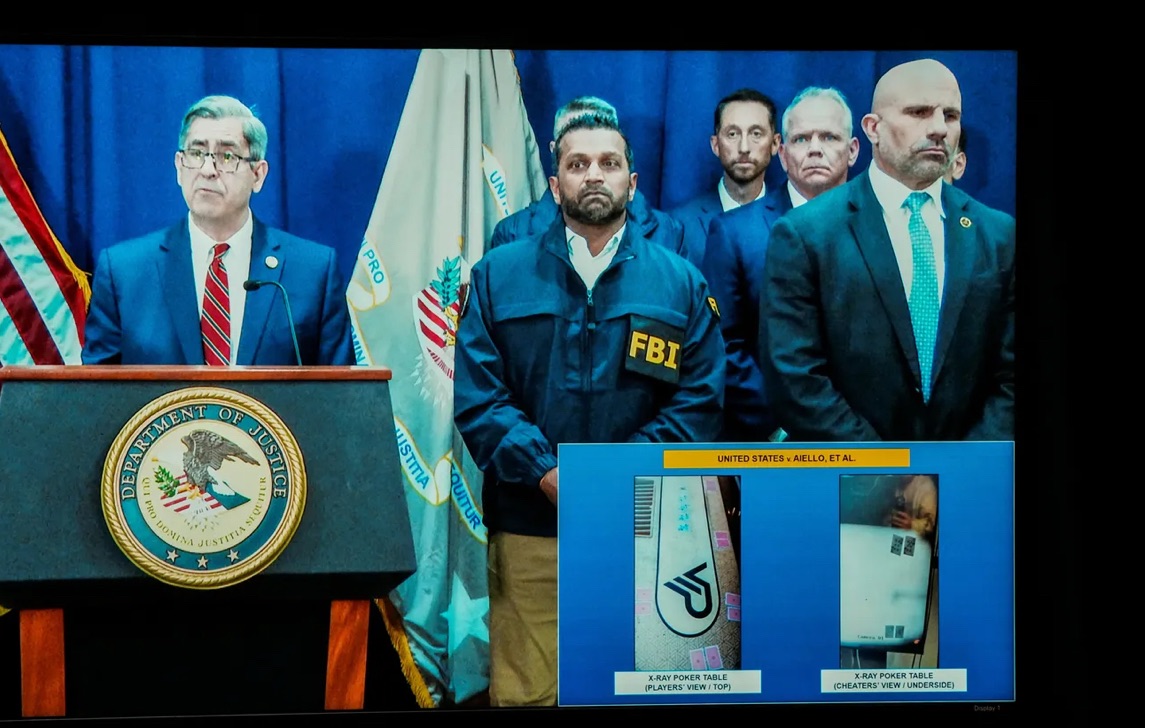
    Federal authorities have unveiled one of the most explosive scandals in modern sports history, charging multiple NBA players and a head coach in a sprawling gambling operation allegedly linked to the New York City Mafia.

    According to indictments unsealed Thursday, the FBI arrested more than 30 individuals including Portland Trail Blazers head coach Chauncey Billups and Charlotte Hornets guard Terry Rozier, accused of participating in illegal sports betting, insider wagering, and rigged poker games operated by members of the Gambino and Genovese crime families.

    Image credit: iStock photos

    The investigation, which federal prosecutors say spans several years, paints a disturbing picture of corruption, greed, and manipulation inside professional basketball.

    Court documents allege that players and coaches supplied confidential team information, including injury updates and playing-time plans to betting rings in exchange for cash payouts. Prosecutors say some players intentionally altered their performance or exited games early to help rig bets.

    Simultaneously, the indictment details an elaborate network of high-stakes underground poker games in New York, Miami, and Las Vegas, where organized crime members used advanced cheating technology, including marked cards and tampered shuffling machines to swindle wealthy participants.

    Coach Billups is accused of acting as a “recruiter,” drawing in celebrities and athletes to participate in the rigged poker sessions, giving the scheme credibility while the Mafia profited from fixed outcomes and illicit betting.

    Federal prosecutors say millions of dollars were laundered through cryptocurrency and shell companies.

    The scandal has sent shockwaves through the NBA, an organization that has long prided itself on integrity and transparency. In recent years, the league has actively embraced sports betting partnerships, with major gambling companies sponsoring teams, broadcasts, and even in-arena experiences.

    But this case exposes the dark side of sports wagering the vulnerability of athletes and the ease with which gambling can corrode trust in competition.

    “When money meets temptation, ethics often lose,” said one federal official involved in the investigation. “This case shows how quickly entertainment can turn into exploitation.”

    Experts say the scandal underscores a growing problem in both professional sports and everyday life: the normalization of gambling culture.

    Since the Supreme Court legalized sports betting nationwide in 2018, gambling apps and advertisements have flooded television and social media, promoting betting as harmless fun. Yet behind the bright lights and jackpots lies an escalating public-health issue.

    According to the National Council on Problem Gambling, over 2 million Americans meet the criteria for severe gambling addiction, and millions more are at risk. The rise of online platforms has made it easier than ever to place bets and harder to resist chasing losses.

    “Gambling doesn’t just cost money,” said Dr. Michael Torres, an addiction specialist based in New York. “It costs families, careers, and sometimes, lives. The pressure to win can turn anyone even a professional athlete into a gambler desperate for control.”

    For professional athletes, the stakes are even higher. Access to insider information, large incomes, and public scrutiny create a dangerous mix of opportunity and temptation. What begins as a small wager can spiral into a criminal enterprise as this case illustrates.

    Image credit: NBA Gambling Podcast

    The NBA issued a brief statement saying it is cooperating fully with federal authorities and has launched its own internal investigation. “Integrity is the foundation of our game,” the league said. “We will take all necessary steps to uphold that standard.”

    Analysts expect lifetime bans and criminal convictions if the allegations are proven true. The scandal also reignites debate about whether professional sports leagues have gone too far in embracing gambling as a revenue stream.

    “When the same industry that promotes fair play profits from betting on outcomes, conflicts of interest become inevitable,” said sports attorney Rachel Leung. “This is a wake-up call.”

    For fans, the arrests are a betrayal — not only of the game but of the belief that what happens on the court is real. When the line between competition and corruption blurs, every shot, substitution, and injury report becomes suspect.

    For players, the case is a reminder that fame doesn’t protect against consequence.

    And for society, it’s a warning: as gambling continues to expand across screens, states, and sports, the risk of addiction, manipulation, and moral erosion grows right along with it.

    As the federal case unfolds, one truth has already surfaced the house always wins, and too often, it’s the people and the game that lose.

    BY: BEWITTY Staff

  • Shutdown Fallout: Black Federal Workers Bear the Brunt of Washington’s Stalemate

    Shutdown Fallout: Black Federal Workers Bear the Brunt of Washington’s Stalemate

    As the U.S. government shutdown stretches past three weeks, the ripple effects are being felt across the nation but for Black Americans, the economic and emotional toll is clear.

    Nearly one in five federal employees are Black, a workforce share far greater than their percentage of the overall U.S. population. Many of these employees serve in critical roles from administrative staff to defense contractors and postal workers positions long considered a reliable pathway to economic stability. But with thousands now furloughed or working without pay, those pathways have abruptly been thwarted.

    Image credit: iStock

    For decades, federal employment has been one of the most stable avenues to the middle class for Black Americans. These jobs provided steady income, pensions, and protections against discrimination that were harder to find in the private sector.

    Now, as the shutdown drags on, that legacy is under strain.

    “This is more than a paycheck delay it’s a breach of trust,” said Angela Morrison, a furloughed worker with the Department of Housing and Urban Development. “We built our families and our futures on the promise that public service was secure. Now, we’re watching that foundation crack.”

    Economists warn that even a short disruption can deepen racial wealth disparities, since Black households are less likely to have financial safety nets or intergenerational wealth to fall back on due to historic, ongoing redlining, blockbusting, racial covenants, urban renewal & gentrification in short. Meanwhile housing, childcare, and transportation costs continue to rise, leaving families with limiting or at best financially predatory options.

    The effects reach far beyond individual workers. In cities like Washington, D.C., Atlanta, and Baltimore where the federal government is a top employer local Black owned businesses are also feeling the strain. Restaurant owners and service providers who rely on federal workers’ patronage have reported sharp drops in sales since the shutdown began.

    Churches and nonprofits have stepped in to provide support, hosting food drives and financial workshops. Still, advocates warn that community charity cannot replace systemic solutions.

    “We are watching an old wound reopen,” said Marc Morial, president of the National Urban League. “The shutdown doesn’t just halt government functions, it undermines progress in closing racial economic gaps that have taken generations to narrow.”

    Negotiations in Congress remain gridlocked as lawmakers continue to clash over spending priorities. Meanwhile, families are bracing for a fourth unpaid week with mortgages due again, and little clarity about when relief will come.

    If the shutdown continues, experts predict a cascading effect.

    For many Black workers, the message is clear: their service remains essential, but their compensation unclear.

    BY: BEWITTY Staff

  • Day of Celebration Becomes Day of Grief at Delta State University” after student found hung

    Image credit: Delta State University

    CLEVELAND, Miss. — Delta State University’s campus was struck by tragedy Monday morning when a student was found dead, just as the school was preparing to mark its 100th anniversary.

    The Universities police said they were notified around 7:05 a.m. of a body hanging from a tree near the pickleball courts. The victim was identified as Demartravion “Trey” Reed, a 21-year-old student from Grenada, Mississippi.

    The Bolivar County Coroner’s Office removed the body, and investigators with the Delta State University Police Department, the Mississippi Bureau of Investigation, the Bolivar County Sheriff’s Department, and Cleveland Police are working the case. Authorities said there is currently no evidence of foul play, though the official manner of death has not been confirmed. An autopsy is pending.


    Demartravion “Trey” Reed, a 21-year-old Delta State University student, was found dead on campus Monday morning, a tragedy that brought the school’s planned centennial celebrations to a halt. Image credit: Trey Reed’s Facebook

    In response, Delta State canceled all classes and centennial events scheduled for Monday. Counseling services were made available to students, faculty, and staff.

    University President Daniel Ennis issued a statement expressing condolences to Reed’s family and the campus community. “We are deeply saddened by this loss,” Ennis said. “Our thoughts and prayers are with Trey’s loved ones and with all who are grieving today.”

    The discovery has left the university community in shock, casting a somber tone over what was meant to be a milestone day for the school. Officials urged students and the public to avoid speculation as the investigation continues.

    Should melanated people start withdrawing from this institution where such an event could happen with no surveillance footage known at this time?

    BY: BEWITTY Staff