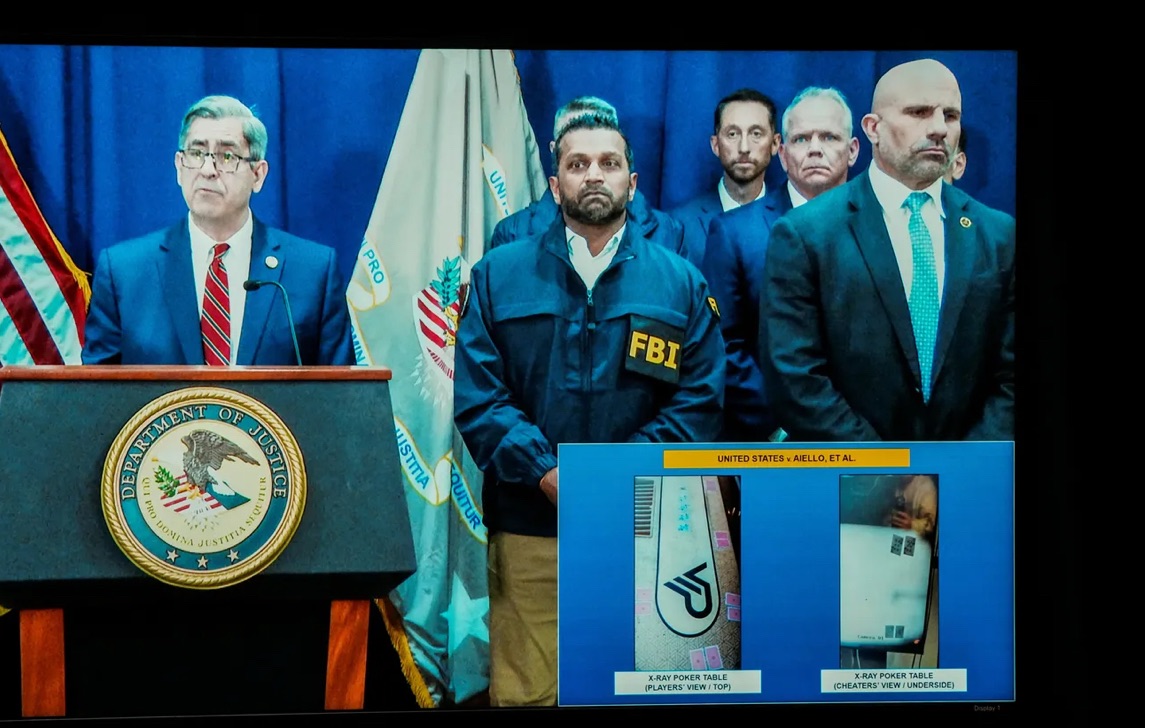

Federal authorities have unveiled one of the most explosive scandals in modern sports history, charging multiple NBA players and a head coach in a sprawling gambling operation allegedly linked to the New York City Mafia.
According to indictments unsealed Thursday, the FBI arrested more than 30 individuals including Portland Trail Blazers head coach Chauncey Billups and Charlotte Hornets guard Terry Rozier, accused of participating in illegal sports betting, insider wagering, and rigged poker games operated by members of the Gambino and Genovese crime families.

The investigation, which federal prosecutors say spans several years, paints a disturbing picture of corruption, greed, and manipulation inside professional basketball.
Court documents allege that players and coaches supplied confidential team information, including injury updates and playing-time plans to betting rings in exchange for cash payouts. Prosecutors say some players intentionally altered their performance or exited games early to help rig bets.
Simultaneously, the indictment details an elaborate network of high-stakes underground poker games in New York, Miami, and Las Vegas, where organized crime members used advanced cheating technology, including marked cards and tampered shuffling machines to swindle wealthy participants.
Coach Billups is accused of acting as a “recruiter,” drawing in celebrities and athletes to participate in the rigged poker sessions, giving the scheme credibility while the Mafia profited from fixed outcomes and illicit betting.
Federal prosecutors say millions of dollars were laundered through cryptocurrency and shell companies.
The scandal has sent shockwaves through the NBA, an organization that has long prided itself on integrity and transparency. In recent years, the league has actively embraced sports betting partnerships, with major gambling companies sponsoring teams, broadcasts, and even in-arena experiences.
But this case exposes the dark side of sports wagering the vulnerability of athletes and the ease with which gambling can corrode trust in competition.
“When money meets temptation, ethics often lose,” said one federal official involved in the investigation. “This case shows how quickly entertainment can turn into exploitation.”
Experts say the scandal underscores a growing problem in both professional sports and everyday life: the normalization of gambling culture.
Since the Supreme Court legalized sports betting nationwide in 2018, gambling apps and advertisements have flooded television and social media, promoting betting as harmless fun. Yet behind the bright lights and jackpots lies an escalating public-health issue.
According to the National Council on Problem Gambling, over 2 million Americans meet the criteria for severe gambling addiction, and millions more are at risk. The rise of online platforms has made it easier than ever to place bets and harder to resist chasing losses.
“Gambling doesn’t just cost money,” said Dr. Michael Torres, an addiction specialist based in New York. “It costs families, careers, and sometimes, lives. The pressure to win can turn anyone even a professional athlete into a gambler desperate for control.”
For professional athletes, the stakes are even higher. Access to insider information, large incomes, and public scrutiny create a dangerous mix of opportunity and temptation. What begins as a small wager can spiral into a criminal enterprise as this case illustrates.

The NBA issued a brief statement saying it is cooperating fully with federal authorities and has launched its own internal investigation. “Integrity is the foundation of our game,” the league said. “We will take all necessary steps to uphold that standard.”
Analysts expect lifetime bans and criminal convictions if the allegations are proven true. The scandal also reignites debate about whether professional sports leagues have gone too far in embracing gambling as a revenue stream.
“When the same industry that promotes fair play profits from betting on outcomes, conflicts of interest become inevitable,” said sports attorney Rachel Leung. “This is a wake-up call.”
For fans, the arrests are a betrayal — not only of the game but of the belief that what happens on the court is real. When the line between competition and corruption blurs, every shot, substitution, and injury report becomes suspect.
For players, the case is a reminder that fame doesn’t protect against consequence.
And for society, it’s a warning: as gambling continues to expand across screens, states, and sports, the risk of addiction, manipulation, and moral erosion grows right along with it.
As the federal case unfolds, one truth has already surfaced the house always wins, and too often, it’s the people and the game that lose.
BY: BEWITTY Staff


