Category: Spotlight News

  • As Black History Month Ends: We Don’t Owe You Strength

    As Black History Month Ends: We Don’t Owe You Strength

    Every February, a familiar narrative returns. We celebrate resilience. We uplift perseverance. We honor the strength of a people who turned suffering into survival and oppression into progress.

    And while there is truth in that story, there is also a quiet distortion. Somewhere along the way, strength stopped being a testament to what we endured and became an expectation of who we must be.


    Grieving protesters share an emotional embrace in West Baltimore following the 2015 death of Freddie Gray, 25, while in police custody. (Yunghi Kim / Contact Press Images)

    Black existence is constantly framed through endurance, through rising above, pushing through, and making beauty from pain. The world applauds the ability to survive what should have broken us, yet rarely questions why survival was necessary in the first place.

    Strength has been romanticized. Trauma is called inspiring. Survival is called powerful. Silence is called grace. But survival was never meant to be a personality.


    The demonstration took place in front of the Florida Theater on Monroe Street, with Sheriff William P. Joyce of Leon County pictured on the left.

    There is an unspoken pressure placed on Black lives to endure without collapsing, to forgive without closure, to succeed without rest. To turn wounds into wisdom quickly enough to make others comfortable.

    We are expected to be unshakeable in the face of injustice, to transform anger into eloquence, grief into growth. And when we don’t, when we are tired, undone, uncertain, or simply human it is treated as failure rather than truth.


    Protesters take to the streets of Ferguson, Missouri, following the 2014 shooting of 18-year-old Michael Brown. The unrest reflects deep pain and frustration over systemic injustice and the loss of a young life.

    But strength is not the only legacy we are allowed to claim. Softness is not weakness. Rest is not surrender. Joy without explanation is not indulgence.

    We do not exist to be lessons in resilience. We do not exist to be symbols of overcoming. We do not exist to inspire through our suffering.

    Our humanity is not conditional upon how much we can endure. As Black History Month closes, perhaps the most radical thing we can carry forward is this: We don’t owe the world our strength.


    Rev. Jesse Jackson, civil rights titan and enduring moral voice, now an ancestor. A relentless advocate for justice and equality, photographed at Tuskegee University. Held a global impact on human rights. Image credit: Tuskegee University

    In the end, beyond the history, beyond the expectations, beyond the myth of endless resilience, we are human. We are allowed to feel without performing strength, to rest without earning it, to exist without turning our pain into purpose. Our lives are not meant to be constant demonstrations of endurance. They are meant to include softness, uncertainty, laughter, and ease. We should be allowed the full range of humanity not just the parts that prove we can survive.

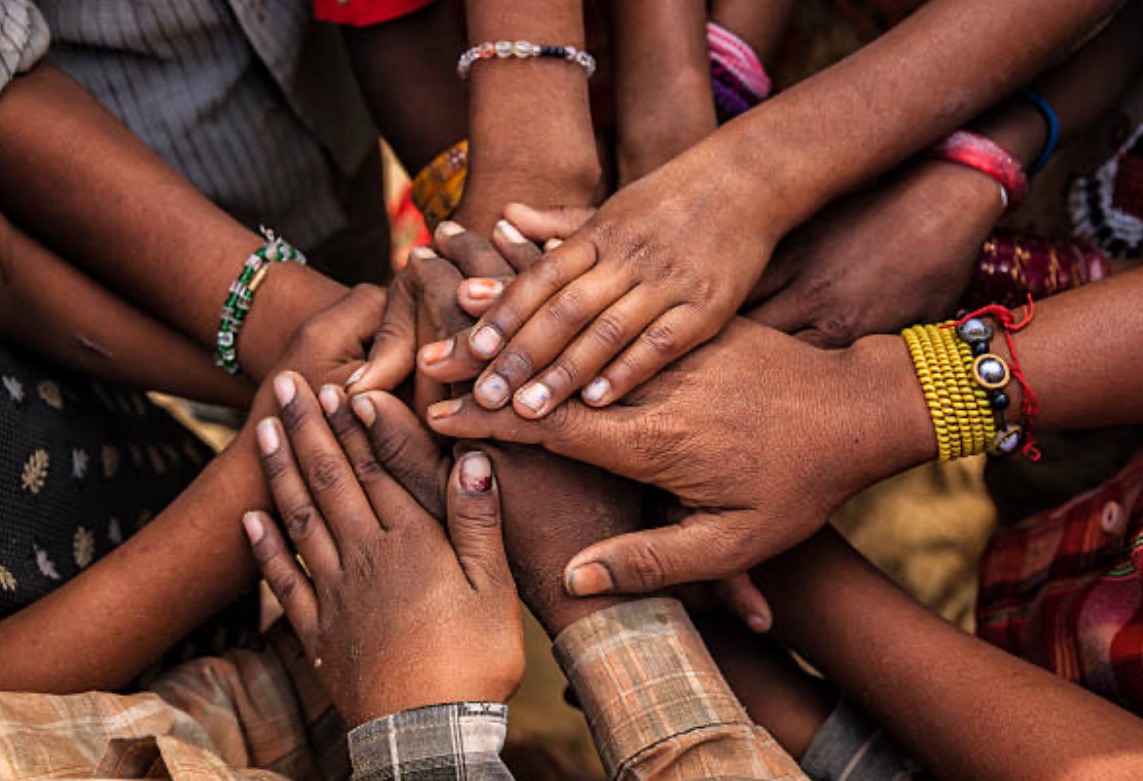
    Image credit: monkeybusinessimages/Getty Images

    We are allowed to simply be.

    If any obligation is carried forward, it isn’t owed to the world that stood by as we endured it is owed to one another. To those who came before us and those who will follow. What we owe is not strength for display, but presence in each other’s lives showing up with care, honesty, protection, and grace. We owe one another the freedom to be seen without performance, to be supported without condition, and to exist without having to justify our worth through struggle. Let what we carry forward be rooted in community not in surviving for the world’s approval, but in living fully together.

    BY: BEWITTY Staff
  • Black Cinema Takes Center Stage as ‘Sinners’ Earns Historic 16 Oscar Nominations

    Black Cinema Takes Center Stage as ‘Sinners’ Earns Historic 16 Oscar Nominations


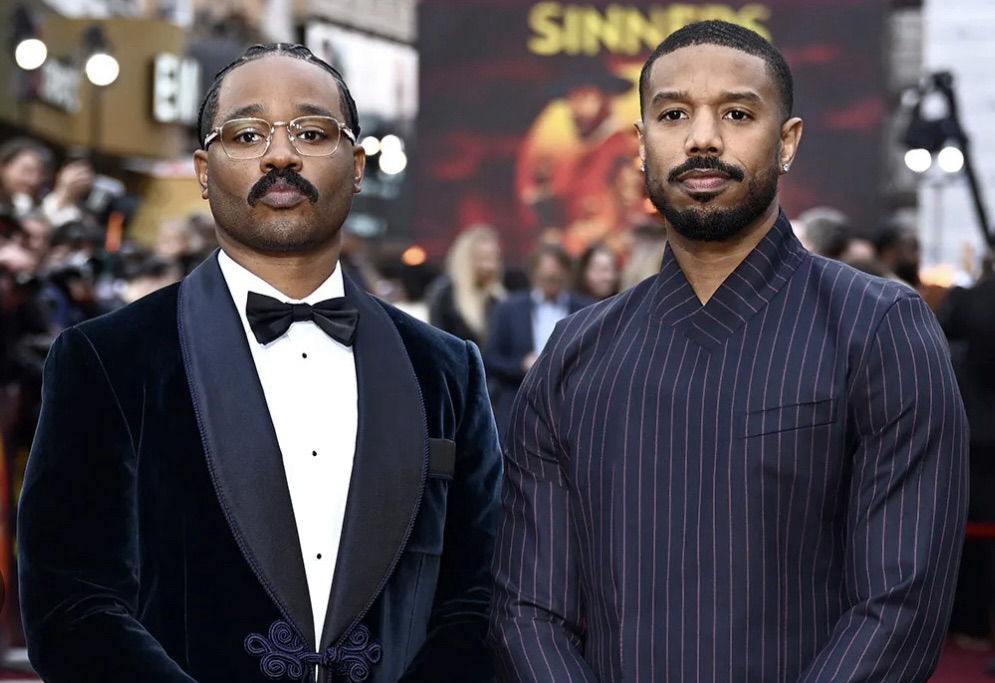
    Ryan Coogler and Michael B. Jordan at the European premiere of Sinners in London. Photo by Gareth Cattermole/Getty Images.

    Ryan Coogler’s Sinners has made Oscars history, earning 16 nominations for the 98th Academy Awards and officially becoming the most-nominated film ever recognized by the Academy, a record breaking moment that feels bigger than Hollywood and deeply personal for Black audiences who have long fought to see their stories treated with the same weight, artistry and prestige as anyone else’s. The nomination tally surpasses every film that has come before it and signals a rare alignment between critical acclaim, cultural resonance and institutional recognition for a story rooted unapologetically in Black life.

    Set in the Jim Crow era South, Sinners follows twin brothers who return home to open a blues club, only to confront racial terror and supernatural forces that blur the line between history and folklore. It’s a film steeped in the textures of Black Southern life it’s music, the grief, the faith, the grit, the beauty while daring to move beyond the narrow expectations often placed on Black cinema. Instead of staying confined to realism or trauma narratives, Coogler leans into genre, myth and imagination, proving that Black stories can be expansive, cinematic and otherworldly while still grounded in truth. That creative freedom is part of what makes the film’s historic nomination count feel so significant: it validates not just representation, but range.

    The Academy recognized Sinners across nearly every major and technical category, including Best Picture, Best Director and Best Original Screenplay for Coogler and Best Actor for Michael B. Jordan, who earned the first Oscar nomination of his career for a demanding dual performance. Veteran actor Delroy Lindo received his first nomination at age 73, a moment that many fans see as long overdue recognition for decades of powerful work that too often went overlooked. Wunmi Mosaku’s supporting actress nod further speaks to the depth of the ensemble.


    Image credit: Michael B. Jordan portraying twin brothers in “Sinners.” -Warner Bros.

    Among the most meaningful milestones is another for costume designer Ruth E. Carter, whose work has long defined the visual language of Black history on screen. With her latest nomination for Sinners, Carter becomes the most-nominated Black woman in Academy Awards history, a distinction that resonates with her generations of talent threading culture into every garment.

    For Coogler, an Oakland-born filmmaker who has consistently centered Black identity in blockbuster spaces, the achievement marks a new chapter in a career built on intention. From Fruitvale Station to Creed to Black Panther, he has shown that films grounded in Black experience can be both commercially successful and artistically ambitious. With Sinners, he pushes that idea even further, crafting a story that is at once intimate and epic, historical and speculative, spiritual and political.

    The cinematic significance of this moment extends beyond trophies. For decades, Black filmmakers have had to fight for funding, distribution and legitimacy, often told that their narratives were too specific to resonate widely. Yet here stands a blues-soaked, Southern Gothic tale about Black survival and imagination holding the highest nomination count in Oscars history.

    Whether or not the film converts nominations into wins, the milestone is already set. With 16 nods, Sinners stands as the most nominated movie the Academy has ever recognized a distinction that reflects both its artistry and its cultural reach. For Black creatives who have long pushed the industry forward, the achievement feels simple and well earned: the work spoke, and the Academy responded.

    BY: BEWITTY Staff

  • The Legacy of Martin Luther King Jr.: Courage Beyond Comfort

    The Legacy of Martin Luther King Jr.: Courage Beyond Comfort

    Civil Rights leader & Black American Icon Dr. Martin Luther King Jr.

    Each year on Martin Luther King Jr. Day, America repeats a familiar ritual. Quotes are shared, photos are reposted, and Dr. King is remembered as a gentle dreamer whose message was unity, peace, and hope. This version of Dr. King is comforting. It is also incomplete.

    If Martin Luther King Jr. were alive today, he would not be widely celebrated. He would be criticized, mischaracterized, and accused of being divisive. The language would be different, but the response would be the same. Where he was once called an agitator or a troublemaker, today he would be labeled “woke,” “radical,” or “anti-American.” His presence would not be welcomed; it would be policed.

    This is not speculation—it is history. During his lifetime, Dr. King was deeply unpopular with the majority of Americans. He was surveilled by the federal government, jailed repeatedly, and pressured to abandon his work. He was told to slow down, to wait, and to be more considerate of those made uncomfortable by his demands. His strongest opposition often came not from extremists alone, but from moderates who preferred order over justice.

    If Dr. King were organizing today, he would be condemned for the same reasons. He would be criticized for disrupting traffic, for interfering with the economy, and for refusing to make his demands more palatable. His outspoken critique of capitalism, militarism, and economic inequality would be dismissed as unrealistic or dangerous. The very tactics that made his movement effective would be used as evidence against him.

    Black Americans did not simply inherit Dr. King’s dream, we inherited the weight of carrying it forward in a society that still resists its fulfillment. We inherited the expectation to remain calm while harmed, to be articulate in moments of grief, and to extend grace in situations where justice is absent. We were taught that if we spoke correctly, dressed appropriately, and protested peacefully enough, progress would follow.

    But respectability has never been a shield. Dr. King was educated, eloquent, and intentional. He wore suits. He spoke with moral clarity and spiritual conviction. Yet none of that protected him from being labeled a threat. None of it spared him from surveillance or violence. His life stands as evidence that respectability does not guarantee safety, and dignity does not ensure acceptance.

    Respectability politics suggest that Black humanity is conditional that our worth depends on how comfortable we make others feel. Dr. King’s experience reveals the flaw in that logic. You can be respectful and still be rejected. You can be peaceful and still be punished. You can be right and still be resisted.

    Dr. King was not killed because he was polite. He was killed because he was effective. His message challenged the economic and social foundations of the nation, and that challenge was never meant to be embraced without resistance.

    Today, Dr. King is celebrated largely because he no longer disrupts. His words are quoted, but his critique is ignored. His dream is honored, but his demands are softened. The systems he called unjust remain largely intact, while his legacy is used to silence those who continue the work.

    On Martin Luther King Jr. Day, it is not enough to remember what he hoped for. We must also confront what he warned us about. Dr. King did not ask America to like Black people. He asked America to change.

    If that truth remains uncomfortable, it may be because we are finally listening closely enough.

    Honoring Dr. Martin Luther King Jr. means engaging his truth, not just repeating his words. His legacy calls us to confront why the injustices he challenged still endure and why those who speak with similar urgency today are often dismissed.

    Dr. Martin Luther King Jr. gave this country a moral blueprint rooted in courage, love, and an unshakable demand for justice. His legacy lives not only in his words, but in the generations who continue to walk forward with the same conviction, carrying his vision with strength, dignity, and hope.

    BY: BEWITTY Staff

  • Unseen Valor: Honoring the Black Heroes Who Shaped America’s Military Legacy

    Unseen Valor: Honoring the Black Heroes Who Shaped America’s Military Legacy

    Black Americans have served in U.S. military forces from the earliest days of the nation despite facing discrimination, segregation, and unequal treatment, yet still contributing significantly to the defence of the country.

    During the Civil War, more than 179,000 Black American men served in the Union Army, amassing more than 10% of its total force many of whom were formerly enslaved men from the Confederate states.  One notable figure: William H. Carney. As a Sergeant with the 54th Massachusetts Infantry Regiment, carried the Union flag during the assault on Fort Wagner, South Carolina, in 1863. Severely wounded, he nonetheless kept the flag aloft, and eventually received the Medal of Honor in 1900. 

    Black American soldiers typically served in segregated units well into the 20th century. Despite that, they contributed in all the major U.S. wars.  For instance, Henry Johnson (of the 369th Infantry Regiment, the “Harlem Hellfighters”) fought in WWI in Europe, engaging in hand-to-hand combat with German troops and earning the French Croix de Guerre. His story is emblematic of courage despite the racial challenges faced back home. 


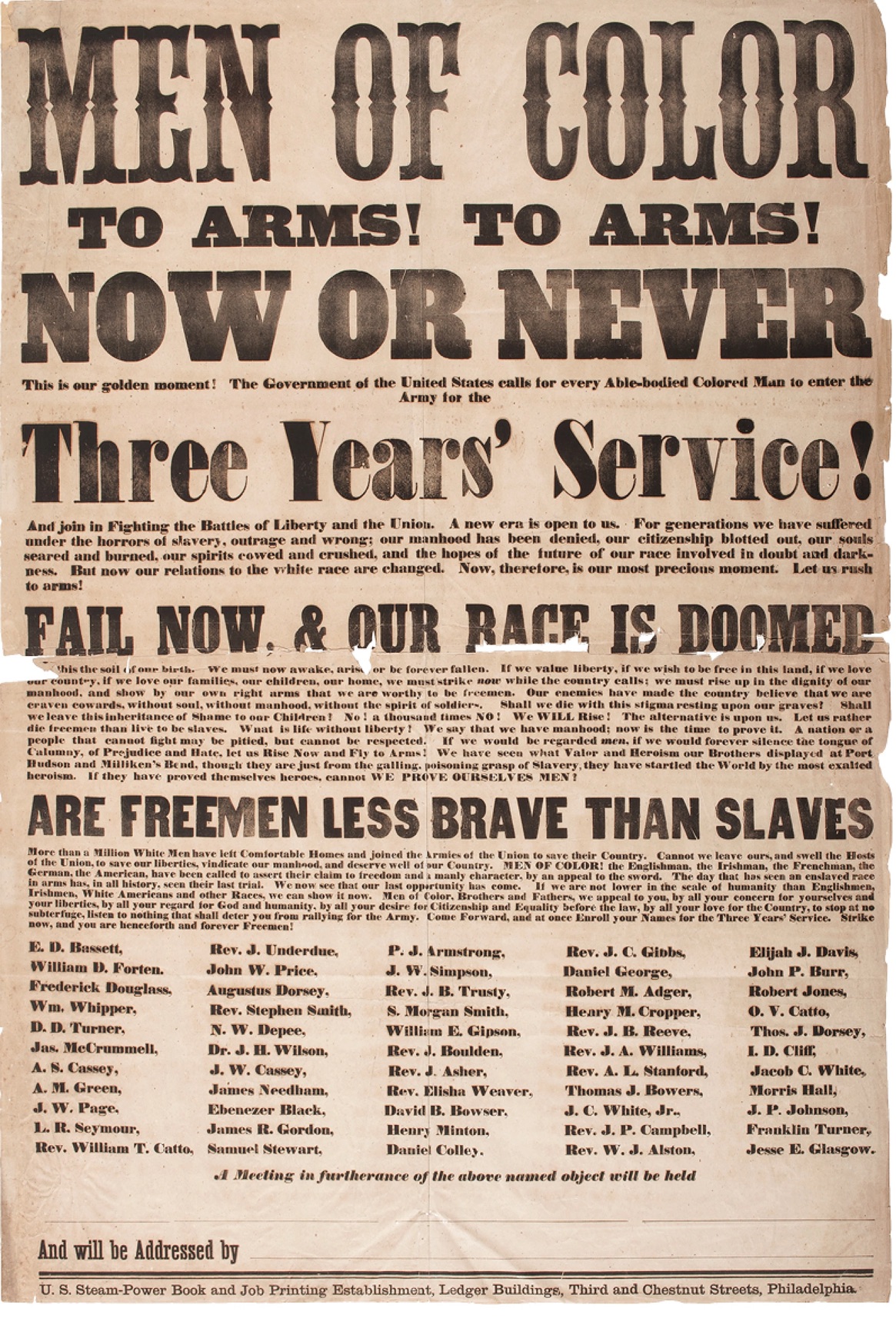
    Company E, 4th U.S. Colored Infantry, Fort Lincoln brave soldiers whose service in the U.S. Colored Troops helped secure victory and redefine freedom. (Library of Congress)

    The U.S. Army itself recognizes a number of “firsts” for Black Americans: Benjamin O. Davis Sr. became the first Black American general officer in the U.S. Army in 1940.  Another example: Col. Charles Young, who in the late 19th / early 20th century became the first Black colonel in the regular U.S. Army and commanded Black American troops. 

    Image credit: US Army

    The service of Black Americans in the U.S. Army helped lay a foundation for integration and progress within the military. Segregation ended in large part following Harry S. Truman’s 1948 executive order desegregating the armed forces. Recognizing this history helps us understand that the day of Veterans Day is not just about generic service, but about the sacrifices made by people who America was fighting yet fought for it.


    The 369th Infantry Regiment rose above relentless discrimination and neglect to earn the legendary name “The Harlem Hellfighters,” becoming one of the most decorated and fearless units of World War I. (Photo courtesy of the U.S. Army)

    Veterans Day isn’t only about remembering those who “went to war” it’s about acknowledging all veterans and their willingness to serve the nation in times of need.

    For Black Americans, service in the U.S. Army and other branches has been interwoven with the broader struggle for civil rights, equality, and recognition. Their military contributions reinforce the principle that defense of the country and the ideals of freedom and justice are shared responsibilities even when those ideals haven’t always been fully extended. Recognizing the role of Black service members enriches our understanding of American military history and helps ensure that commemoration is inclusive.

    Veterans Day, observed each year on November 11, honors the courage and sacrifice of all U.S. military veterans. But it’s also a time to recognize the extraordinary contributions of Black Americans, whose service has been both pivotal and often overlooked throughout history.

    From the earliest battles for freedom to modern warfare, Black soldiers have fought with resilience, integrity, and patriotism irregardless of facing discrimination and segregation.

    Alexander Kelly and André Cailloux proved their valor on the front lines, earning medals and changing perceptions of Black soldiers’ capability and courage. Their service paved the way for future generations.

    In the 20th century, leaders such as Brigadier General Benjamin O. Davis Sr., the first Black general in U.S. Army history, broke through racial barriers and inspired integration within the ranks. Soldiers like Sergeant William H. Thompson, who received the Medal of Honor for heroism in the Korean War, and veterans such as Wilbur Barnes and Charles Earnest Berry, who served through the transition from segregation to equality, carried that legacy forward.

    Their courage reflects a deeper truth that America’s defense has always been a shared effort. They served with strength, dignity, and faith proving that patriotism isn’t measured by recognition, but by sacrifice. Their legacy is the heartbeat of freedom, echoing through every generation that follows.

    BY: BEWITY Staff

  • The World’s Largest Black Doll Show Returns to Detroit for Another Celebration of Fashion, Culture and Art

    Detroit — The world’s largest Black doll show is making its return to Detroit this fall, promising another vibrant celebration of fashion, culture, and art that continues to grow in influence more than a decade after its founding.

    Black reborn baby doll.

    The Detroit Doll Show, created in 2012 by Sandra Epps of Sandy’s Land LLC, has evolved into an international destination for collectors, artists, families, and cultural enthusiasts. The event was born from a simple yet powerful mission: to provide representation in a toy industry that has historically marginalized people of color. Today, it is recognized as the largest showcase of its kind in the world.

    This year’s event will take place Saturday, November 15, 2025, from 11:00 a.m. to 5:00 p.m. at the Ford Wellness Center on Conner Street. Admission is set at $7, with VIP packages available for attendees seeking early access, gift bags, and exclusive programming.

    Image credit: Detroit Doll show Facebook

    Organizers say guests can expect a full day of programming designed to blend artistry with education. Highlights include a fashion show inspired by Black dolls and heritage, live performances featuring African drumming and dance, panel discussions on cultural identity, and workshops for children and families. The popular doll look-alike contest and reborn doll competition will also return, offering playful opportunities for engagement across generations.

    A bustling marketplace will feature vendors from across the country, offering dolls, accessories, books, original art, and handcrafted designs. For many independent creators, the show serves as both a business opportunity and a platform for cultural storytelling.

    This year’s celebration also includes a strong focus on legacy. Honorees include Daniel Baxter, CEO of the Dr. Ossian H. Sweet Foundation, and Emeline King, Ford Motor Company’s first African American female designer. The event will also spotlight the work of fashion designers Byron Lars and Bob Mackie, whose Black Barbie creations expanded the vision of beauty in the doll industry.

    While the Detroit Doll Show continues to grow, its core mission remains the same: to uplift representation, inspire self-love, and highlight the creativity of Black artists and entrepreneurs. For children, seeing dolls that look like them can be a formative affirmation of worth and identity. For adults, the event provides a space to honor history while investing in the future of inclusive art and design.

    As Epps has emphasized in past interviews, the show is about more than dolls, it is about storytelling, empowerment, and legacy. Each year, Detroit becomes the epicenter of this global movement, drawing visitors who leave with more than collectibles; they leave with pride, affirmation, and community.

    With its return this November as announced via Facebook, the Detroit Doll Show is poised once again to transform a day of art and commerce into something much deeper: a living celebration of Blackness, resilience, and creativity.

    BY: BEWITTY Staff

  • Trailblazing Black Woman Honored With Prestigious Award After $377M in Real Estate Sales

    Trailblazing Black Woman Honored With Prestigious Award After $377M in Real Estate Sales

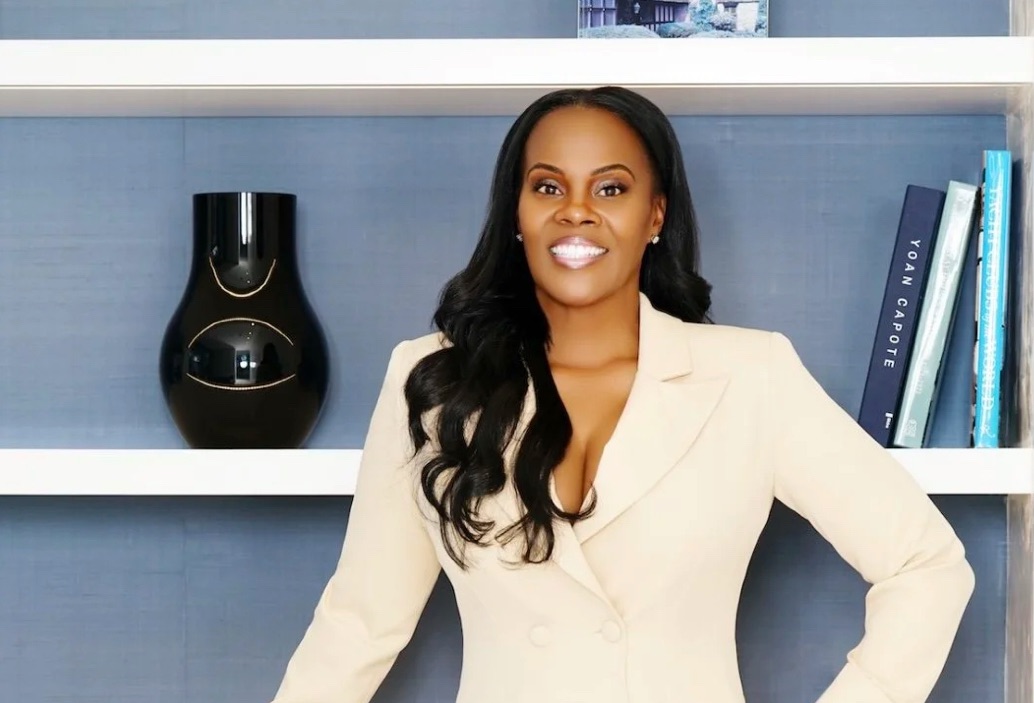
    Image credit: Claudienne Hibbert-Smith/Facebook

    Claudienne Hibbert-Smith, Founder and CEO of TRU Real Estate Exchange Elite, has been recognized by the National Association of Real Estate Brokers (NAREB) with the prestigious Top Teams Award after achieving an extraordinary $377 million in sales volume in 2024. The honor places Hibbert-Smith and her team among the top real estate producers in the nation, celebrating not only their market success but also their mission to transform lives through homeownership and wealth building.

    As a Black American real estate mogul based in Miami, Hibbert-Smith’s milestone represents far more than numbers. It underscores her leadership in an industry where representation matters and highlights her commitment to breaking barriers while lifting others.

    “This recognition is not just about sales, it’s about impact,” Hibbert-Smith said. “We are creating generational wealth, helping families achieve the dream of homeownership, and ensuring that opportunities extend to communities often left behind.”

    Hibbert-Smith has long been recognized as a powerhouse in real estate, consistently ranking among South Florida’s top producers. Her firm, TRU Real Estate Exchange Elite, has built its reputation on delivering high-value service across residential and commercial markets while keeping community empowerment at the forefront.

    Image credit: Instagram

    Founded in 1947, NAREB is the oldest minority trade association in real estate, dedicated to promoting democracy in housing. Its Top Teams Award is among its highest honors, highlighting agents and firms that combine business excellence with a commitment to social impact.

    “Claudienne Hibbert-Smith exemplifies the very best of what NAREB stands for,” said NAREB Spokesperson noting her dual role as both top producer and community advocate.

    As she reflects on the award, Hibbert-Smith is already focused on the future. Beyond her record-breaking sales year, she remains committed to mentoring young professionals and increasing access to homeownership for underserved communities.

    “This is history in the making,” Hibbert-Smith said. “But it’s also a beginning. We’re proving that success and service can go hand in hand.”

    Her story is being hailed as an inspiration not only for American women in real estate but also for those who see business as a tool for empowerment and change.

    BY: BEWITTY Staff

  • George Raveling: Witness to Greatness, Architect of Legacy

    Image credit: Chris Johns / The Seattle Times

    George Raveling, a Hall of Fame college basketball coach who Michael Jordan credits with influencing him to sign with the sneaker brand Nike a move that launched a cultural phenomenon has passed. He was 88.

    “It is with deep sadness and unimaginable pain that we share the passing of our beloved ‘Coach,’ George Henry Raveling, who faced cancer with courage and grace,” Raveling’s family wrote in a statement. “There are no words to fully capture what George meant to his family, friends, colleagues, former players, and assistants and to the world.”


    George Raveling speaks onstage at the 21st Annual Harold and Carole Pump Foundation Gala held at The Beverly Hilton in Beverly Hills, California, on August 20, 2021. (Photo by Tiffany Rose/Getty Images for Harold and Carole Pump Foundation)

    George Raveling began his coaching journey at his alma mater, Villanova, where he joined the staff as an assistant in 1963. That opportunity marked the start of a remarkable career spanning more than 30 years. He went on to serve as an assistant coach at the University of Maryland before taking head coaching positions at Washington State, the University of Iowa, and the University of Southern California. During his tenure, Raveling was named Pac-10 Coach of the Year three times and received honors from the National Association of Basketball Coaches. In 2015, he was inducted into the Naismith Memorial Basketball Hall of Fame.

    Image credit: Getty

    Among his many contributions to the sport, Raveling is perhaps best known for his pivotal role in shaping sneaker history: in 1984, he famously advised a young Michael Jordan fresh out of the University of North Carolina and headed to the Chicago Bulls to sign with Nike, then an up-and-coming athletic brand. The endorsement would go on to become a cultural and commercial landmark.

    In a 2015 interview, Michael Jordan recalled Raveling’s persistent push for him to sign with Nike at a time when the brand was still emerging in the basketball world.

    “He used to always try to talk to me, ‘You gotta go Nike, you gotta go Nike. You’ve got to try,’” Jordan said.

    Jordan eventually took his advice a decision that would revolutionize sports marketing. The deal included a rare 5% royalty on each pair of Air Jordans sold, helping Jordan earn an estimated $1.5 billion from the partnership to date.

    Raveling retired from college coaching in the mid-1990s, but his impact on the game and on generations of athletes continued long after he left the sidelines.

    In August 1963, a young George Raveling and a friend traveled to Washington, D.C., encouraged by the friend’s father to witness history in the making: the March on Washington for Jobs and Freedom. The night before the event, the two college students met a civil rights organizer who asked if they’d be willing to volunteer as security during the demonstration. Standing 6-foot-4, Raveling was an imposing presence and gladly accepted.

    That chance encounter would place him just feet from the podium as Dr. Martin Luther King Jr. delivered his iconic “I Have a Dream” speech a moment that would stay with Raveling for the rest of his life.

    Keeping sacred for over 20 years that he had the original typewritten copy of the “I Have a Dream” speech private. He didn’t tell anyone not even his wife. It wasn’t until 1983, the year he made history as the first Black head basketball coach at the University of Iowa and in the Big Ten Conference, that he revealed he had held onto the historic document all those years.

    George Raveling’s life was far more than wins and losses on the court. He was a pioneer, a mentor, and a quiet guardian of history. From breaking racial barriers in college basketball to helping shape Michael Jordan’s legacy with Nike, to standing inches from Dr. King during one of the most pivotal moments in American history, Raveling consistently found himself at the intersection of sports, culture, and change.

    His influence spanned generations — not just through the players he coached, but through the lives he touched with his wisdom, grace, and unshakable sense of purpose. Whether courtside or at the heart of a movement, George Raveling led with dignity, vision, and a profound understanding of his place in the bigger picture.

    He leaves behind a legacy not just of excellence, but of impact one that will continue to resound through history books, locker rooms, and lives for years to come.

    BY: BEWITTY Staff

  • Staying Black, Staying Powerful: Viola Davis’s Uncompromising Path in Hollywood


    Viola Davis achieved the coveted EGOT status earning an Emmy, Grammy, Oscar, and Tony. Making her the third Black woman in history to receive this rare and prestigious honor.

    In an industry where success often demands compromise, Viola Davis has chosen a different path one defined by integrity, defiance, and a deep-rooted connection to her identity. In a recent interview, Davis summed it up in a few powerful words: “I stayed Black.”

    This wasn’t just a casual remark but a declaration. A nod to the battles she’s fought throughout her decades-long career. A reminder that her rise to the top tier of Hollywood has never required her to abandon who she is. Instead, Davis has embraced her Blackness at every turn refusing to dilute it for roles, awards, or mainstream comfort.


    Image Credit: © Paramount Pictures / Fences (2016)

    One of the most defining examples of this is her Oscar-winning performance as Rose Maxson in Fences, the 2016 film adaptation of August Wilson’s iconic play. In the role, Davis brought raw emotion, vulnerability, and strength to a character rooted deeply in Black life and struggle in 1950s. She didn’t just play Rose, she was Rose. It was a role that demanded authenticity, and Davis delivered with a power that shook audiences and critics alike.

    Fences wasn’t an anomaly in her career it was a continuation of the deliberate choices she’s made all along. From Doubt to The Help, from Ma Rainey’s Black Bottom to How to Get Away with Murder, Davis has consistently portrayed complex, unvarnished Black women whose stories don’t conform to Hollywood stereotypes.

    “I stayed Black” is more than a personal truth it’s a challenge to an industry that often values palatability over truth. Davis has never tried to soften her features, her voice, or her message. She has refused to “disappear,” as she once put it, into roles that ask her to be anyone but herself.

    Championing the fact that blackness should not be diminished on the main stage but honored, embodied, and celebrated.

    BY: BEWITTY Staff

  • Remembering Chadwick Boseman: Five Years Later, His Legacy Lives On

    PHOTO: JORDAN STRAUSS/INVISION/AP/SHUTTERSTOCK.

    Today marks five years since the world lost Chadwick Boseman, an actor whose body of work and quiet strength elevated not only cinema but the cultural consciousness of a generation.

    Boseman, who died on August 28, 2020, at the age of 43 following a private four-year battle with colon cancer, left behind a legacy defined by transformative performances, unwavering dignity, and a commitment to telling stories that matter.

    Born and raised in Anderson, South Carolina, Boseman’s artistic path began in the theater before transitioning to television and ultimately film. A graduate of Howard University, where he studied under the guidance of Phylicia Rashad, Boseman later attended the British American Drama Academy in Oxford an experience made possible by a scholarship funded quietly by Denzel Washington.

    Though his early career included television roles on shows like Law & Order and Lincoln Heights, Boseman’s breakthrough came in 2013 with 42, where he portrayed baseball legend Jackie Robinson. The role demanded more than athleticism or acting skills it required grace under pressure, which he delivered.


    Chadwick Boseman as T’Challa in Black Panther (2018); Chadwick Boseman as Jackie Robinson in 42 (2013).
    Credit: © Marvel / © Walt Disney Studios Motion Pictures / Courtesy Everett Collection; © Warner Bros. Pictures / Courtesy Everett Collection

    He would go on to portray other historic Black icons, including James Brown in Get On Up (2014) and Thurgood Marshall in Marshall (2017). Each role was meticulously crafted, with Boseman diving deep into the psychology, voice, and movement of the figures he portrayed. His performances didn’t just reenact history they rehumanized it.

    In 2018, Boseman stepped into a role that would cement his place in cinematic history King T’Challa in Marvel’s Black Panther. More than a superhero film, Black Panther became a cultural milestone. It was the first Marvel Studios film led by a Black actor, featuring a predominantly Black cast and crew. Directed by Ryan Coogler, the film shattered box office records and sparked global conversations about representation in Hollywood.

    Boseman’s T’Challa was regal, poised, and complex a hero grounded not in spectacle but in responsibility and compassion. His performance inspired millions, particularly young Black viewers who for the first time, saw a mainstream superhero who looked like them.

    Photo credit: Marvel Studios/Disney

    Black Panther earned over $1.3 billion worldwide and became the first superhero film nominated for Best Picture at the Academy Awards. Boseman’s impact, however, went far beyond accolades it was cultural, emotional, and deeply personal for many.

    What few knew at the time was that during the filming of Black Panther and several subsequent films including Da 5 Bloods and Ma Rainey’s Black Bottom Boseman was undergoing surgeries and chemotherapy.

    Despite his illness, he continued to work tirelessly, never once allowing his health to overshadow his craft. In Ma Rainey’s Black Bottom, his final role, Boseman delivered a searing, vulnerable performance that earned him a posthumous Academy Award nomination and a Golden Globe win for Best Actor.

    The revelation of his private health battle shocked the world. But it also deepened the respect and admiration for the man behind the roles a figure of tremendous resilience, humility, and courage.

    Howard University’s “Chadwick Boseman Fine Arts” Building

    Five years on, Boseman’s influence continues to ripple through the arts, culture, and activism. His alma mater, Howard University, renamed its College of Fine Arts in his honor. New generations of filmmakers and performers cite him as a guiding light. And Marvel chose not to recast his role in Black Panther: Wakanda Forever, instead crafting a story that respectfully mourned his character and celebrated his legacy.

    His most famous quote, delivered during a commencement speech at Howard, remains a guiding principle for many:

    “Purpose is an essential element of you. It is the reason you are on the planet at this particular time in history.”

    Chadwick Boseman lived with purpose and used his platform to uplift, challenge, and inspire. Today, the industry continues to honor him not only as an actor but as an artist whose integrity transcended the screen & left a legacy that will never be forgotten.

    BY: BEWITTY Staff

  • Katrina: Come Hell and High Water Gives the Mic Back to Black New Orleans

    Imaged by Netflix.com

    Twenty years, that’s how long it’s been since the levees broke, since the floodwaters rose and swallowed neighborhoods whole, and since America watched a predominantly Black city suffer while help came far too late.

    But for Black folks in New Orleans and across this country, Hurricane Katrina was never just a natural disaster. It was a mirror. A moment of reckoning. And now, Netflix’s new docuseries “Katrina: Come Hell and High Water” holds that mirror up once again reflecting not only the waterlines left on buildings, but the deep cracks in America’s promise of equality, safety, and care.

    Directed by Geeta Gandbhir, Samantha Knowles, and the incomparable Spike Lee, this three-part documentary doesn’t simply revisit the tragedy, it re-centers the people who lived it, who survived it, and who still carry the weight of it.

    The water came fast, but the abandonment came faster. We remember the images of Black elders stranded on rooftops, children wading through water up to their chests, bodies left in the street.

    This documentary masterfully captures what we didn’t see, the stories behind said images. The everyday lives disrupted. The legacies & heirlooms lost. The trauma etched into generations.

    We hear from survivors who speak not just of the storm itself, but of the silence afterward, the government’s delayed inaction & FEMA’s disastrous failures. While the media criminalized Black grief. As one voice in the film puts it, “We weren’t refugees. We were citizens, and they left us.” That truth lands heavy.

    What sets Katrina: Come Hell and High Water apart is its insistence on Black voices telling Black stories.

    COREY SIPKIN/NY DAILY NEWS ARCHIVE VIA GETTY IMAGES

    The showrunner, Alisa Payne, brings together a creative team that understands how to balance reverence with reality. And with Spike Lee on board who first documented the catastrophe in “When the Levees Broke” the series carries the same unflinching honesty he’s known for. This isn’t just about showing pain. It’s about reclaiming the narrative.

    This time, the survivors are prioritized at the center not the politicians, not the experts. Whom proceed to speak freely about loss, with endurance. Highlighting how New Orleans didn’t just rebuild, it fought to preserve its culture, its soul, its Black ethnic roots.

    If Katrina taught us anything, it’s that disaster didn’t fall evenly. The flood may have been natural, but the devastation was manmade, built on centuries of neglect, redlining, poverty, and institutional racism.

    We’re walked through the failures of the levees designed and poorly maintained with deadly disregard. It looks back on how evacuation plans didn’t account for families without cars. How emergency shelters became sites of dehumanization. How rebuilding efforts favored wealthy developers over displaced residents. Seeing it wasn’t just about infrastructure.

    MICHAEL APPLETON/NY DAILY NEWS ARCHIVE VIA GETTY IMAGES

    “Katrina: Come Hell and High Water” also celebrates. It celebrates the music, the second lines, the families that returned, the youth who’ve grown up refusing to forget. It shows New Orleans not as a place defeated, but as a place defined by resilience.

    LINDA ROSIER/NY DAILY NEWS ARCHIVE VIA GETTY IMAGES
    Imaged by: Andre Perry

    There’s joy in this documentary. However it isn’t the kind that ignores pain, but the kind that rises despite it.

    “Katrina: Come Hell or High Water” is currently streaming on Netflix.

    BY: BEWITTY Staff